What we do is costly! Your support will help us dig more stories.
Yes, I'm Interested!Ignorance isn't always bliss | Don't stay foolish.
Keep informed | Read our news and analysis.
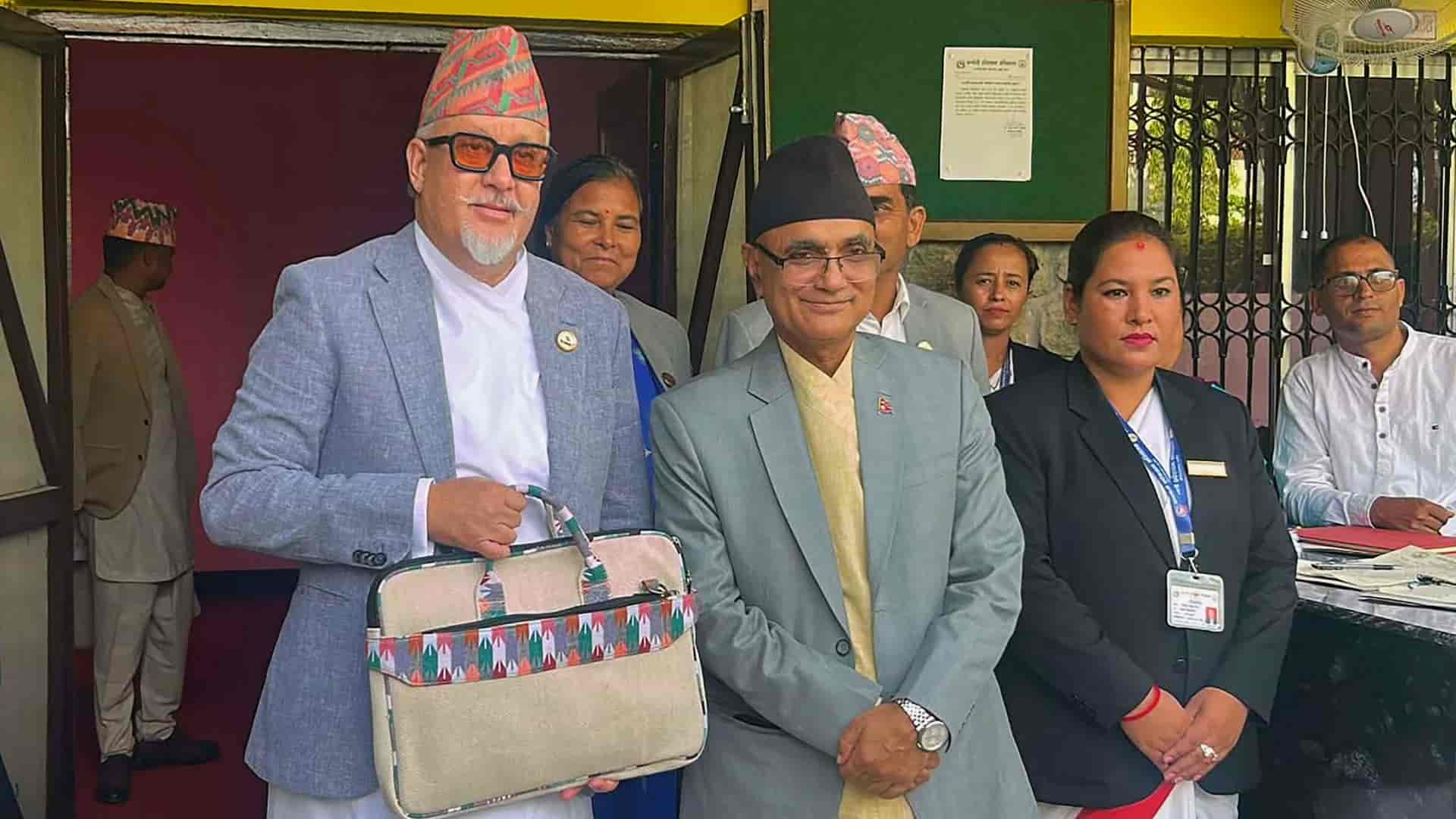
All seven provincial governments announced their budgets for the upcoming fiscal year 2026/27 on Monday, outlining spending plans focused on development, infrastructure, healthcare, agriculture, tourism, and public service delivery while attempting to keep recurrent expenditure under control.
The provincial governments announced their budgets on Monday in accordance with the constitutional provision requiring provincial budgets to be presented on Ashadh 1. A common feature across the budgets is the strong emphasis on capital expenditure, with a significant share of allocations earmarked for development and infrastructure projects.
Chart 1: Provincial bugdets for 2025/26 and 2026/27 and growth rates
Bagmati Province
The Bagmati Provincial Government has unveiled a budget of NRs 66.93 billion for fiscal year 2026/27, the largest among all provinces. The budget was presented in the Provincial Assembly by Minister for Economic Affairs and Planning Prabhat Tamang.
Of the total allocation, NRs 22.96 billion (34.31%) has been earmarked for recurrent expenditure, while NRs 43.97 billion (65.69%) has been allocated for capital expenditure. In the current fiscal year 2025/26, the province had allocated approximately NRs 26.04 billion for recurrent spending and NRs 41.43 billion for capital projects.
The province plans to finance the budget through NRs 30.15 billion in tax revenue, NRs 7.73 billion from other revenue sources, NRs 15.31 billion in federal transfers, NRs 12.76 billion from accumulated surpluses and miscellaneous receipts, and NRs 960 million from loan principal repayments.
Madhesh Province
Madhesh Province has unveiled a budget of NRs 41.14 billion for fiscal year 2026/27. Presenting the budget in the Provincial Assembly, Minister for Economic Affairs Yubaraj Bhattarai stated that citizens who suffer due to the non-delivery of public services would be compensated.
Compared to the current fiscal year's budget of NRs 46.58 billion, the new budget represents a reduction of approximately 13 percent. The province has allocated NRs 26.47 billion (64.36%) for development and infrastructure projects and NRs 14.66 billion (35.64%) for administrative and recurrent expenses.
To finance the budget, the province expects NRs 11.22 billion from internal revenue and miscellaneous receipts, NRs 12.83 billion through federal revenue sharing, NRs 9.49 billion in federal grants, NRs 6.08 billion from the current fiscal year's cash balance, and NRs 1.50 billion through internal borrowing.
Koshi Province
The Koshi Provincial Government has introduced a budget of NRs 40.44 billion for fiscal year 2026/27.
Minister for Economic Affairs and Planning Bidur Kumar Lingthep allocated NRs 13.97 billion for recurrent expenditure and NRs 20.75 billion for capital expenditure, while setting aside NRs 150 million for financial equalisation grants.
The budget prioritises infrastructure development, agricultural modernisation, tourism promotion, employment generation, and improvements in education and healthcare services. The province has also pledged to curb administrative expenses while continuing investment in roads, drinking water projects, irrigation schemes, and schools.
Lumbini Province
The Lumbini Provincial Government has presented a budget of NRs 37.38 billion for fiscal year 2026/27. The budget was tabled in the Provincial Assembly by Minister for Economic Affairs and Planning Dhanendra Karki.
The budget allocates NRs 22.72 billion for capital expenditure and NRs 11.11 billion for recurrent expenditure. Including financial management allocations, the total budget stands at NRs 37.38 billion. In comparison, the province had announced a budget of NRs 38.91 billion for the current fiscal year.
Under its vision of “Prosperous Lumbini, Happy Citizens,” the province has prioritised healthcare, infrastructure, drinking water, education, agriculture, energy, tourism, and youth development.
Key allocations include:
Karnali Province
Karnali Province has announced a budget of NRs 35.40 billion for fiscal year 2026/27, an increase of 7.28 percent from the current fiscal year's budget of NRs 32.99 billion.
Minister for Economic Affairs and Planning Rajeev Bikram Shah presented the budget in the Provincial Assembly. This is the second budget introduced during his tenure.
The new budget allocates NRs 8.60 billion (24.31%) for recurrent expenditure, NRs 20.74 billion (58.31%) for capital expenditure, and NRs 5.54 billion for financial transfers.
To finance the budget, the province expects NRs 850 million in internal revenue, NRs 6.41 billion from unspent funds carried over from the current fiscal year, NRs 10.66 billion from federal revenue sharing, NRs 10.63 billion in equalisation grants, NRs 5.67 billion in conditional grants, NRs 667.8 million in complementary grants, NRs 485.6 million in special grants, and foreign assistance of approximately NRs 96 million.
Gandaki Province
The Gandaki Provincial Government has announced a budget of NRs 32.99 billion for the upcoming fiscal year. Finance Minister Jeet Bahadur Sherchan presented the budget during a Provincial Assembly meeting.
The budget includes NRs 12.72 billion (38.56%) for recurrent expenditure, NRs 20.03 billion (60.68%) for capital expenditure, and NRs 250 million (0.76%) for financial management.
Sudurpashchim Province
The Sudurpashchim Provincial Government unveiled a budget of NRs 37.70 billion for fiscal year 2026/27, nearly NRs 4 billion higher than the current fiscal year's allocation of NRs 33.48 billion.
Minister for Economic Affairs and Planning Bikram Singh Dhami presented the budget shortly before midnight following prolonged negotiations among ruling coalition partners over fund allocation. Opposition lawmakers boycotted the budget presentation.
While the minister announced the overall budget size and funding sources, the breakdown between recurrent and capital expenditure was not disclosed.
Key allocations include:
Read More Stories

Nepal needs to repeat to brand itself
Last year Nepal's goods exports jumped 81.8% to NRs 277.03 billion. That is...

Banking stocks gain momentum as dividend season begins
Dividend announcements by banks and financial institutions (BFIs) for fiscal year 2025/26 have...
Nepal’s challenge of building strong democratic institutions
Over the past few decades, institutional dysfunction and massive dissatisfaction with political establishments...