What we do is costly! Your support will help us dig more stories.
Yes, I'm Interested!Ignorance isn't always bliss | Don't stay foolish.
Keep informed | Read our news and analysis.
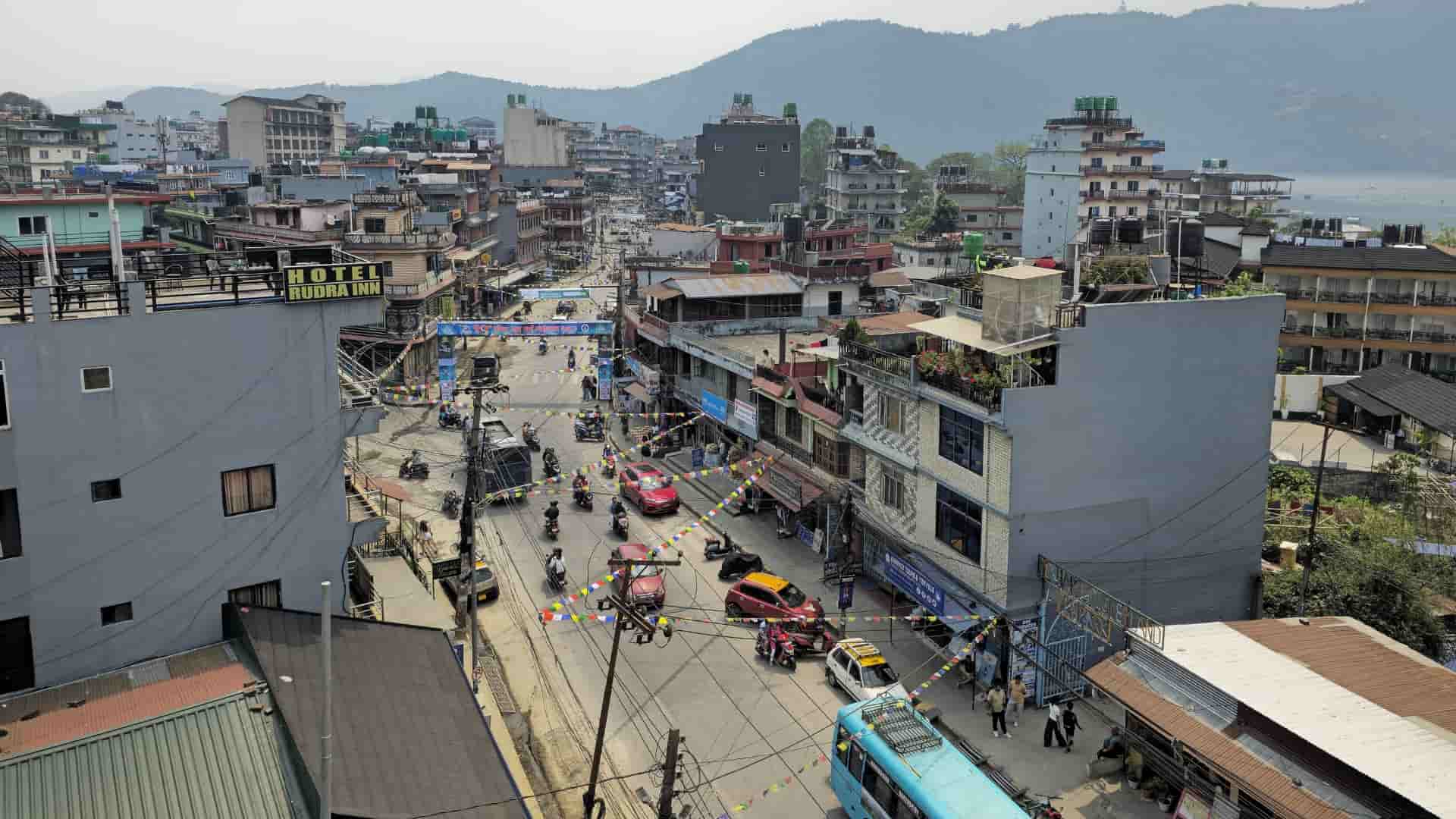
The National Statistics Office has projected Nepal’s economy to expand to NRs 6.6 trillion in the fiscal year 2025/26, with moderate growth driven largely by non-agricultural sectors.
According to a press note released by the office, the country’s Gross Domestic Product (GDP) at current prices is estimated to reach NRs 6.6 trillion in fiscal year 2025/26, up from a revised NRs 6.2 trillion in 2024/25 and NRs 5.8 trillion in 2023/24.
Growth rate remains modest
The economy is expected to grow by 3.68% at basic prices and 3.85% at purchaser’s prices in 2025/26. This marks a slight slowdown compared to the revised 3.80% growth (basic prices) in FY 2024/25, though still higher than the 3.38% recorded in 2023/24.
Non-Agricultural sector leads growth
The non-agricultural sector is projected to grow by 4.54%, significantly outpacing the agricultural sector, which is expected to expand by only 1.58%.
Among broader sectors:
The service sector continues to dominate the economy, contributing 61.8% to GDP, followed by the primary sector (24.5%) and secondary sector (13.7%).
Sectoral highlights
The report identifies electricity and gas as the fastest-growing sector, with an estimated growth of 20.93%, driven by increased production capacity and expanded transmission infrastructure. Financial and insurance activities are also expected to perform strongly, growing by 9.16%.
In contrast, public administration and defense (0.23%) and education (1.50%) are projected to record the slowest growth rates.
Agriculture, forestry, and fisheries, contributing over 24% to GDP, are expected to see subdued growth due to a decline in paddy production and only marginal increases in other crops and livestock output.
Trade remains a key economic driver, contributing 14.09% to GDP, supported by increased imports and domestic production. Meanwhile, sectors such as mining and quarrying (0.43%) and water supply and waste management (0.40%) contribute the least.
Improvements in industry and construction
The industrial sector is expected to grow by 2.83%, improving from a revised growth of 2.27% in 2024/25 and recovering from a contraction of -2.02% in 2023/24. Increased production of cement, steel rods, edible oil, wire, beer and other manufactured goods is expected to support this recovery.
The construction sector is projected to grow modestly by 2.21%, constrained by limited capital expenditure despite some improvement in construction material imports and domestic output.
External sector and remittances
Exports of goods and services are estimated at 9.97% of GDP, while imports remain high at 34.52%.
Remittance inflows are projected to reach 33.02% relative to GDP, highlighting their continued importance in the economy.
Read also:
- Nepal’s growth to slow to 2.3% in FY 26 amid global shocks: World Bank
Consumption, investment, and savings
Final consumption expenditure is expected to account for 90.29% of GDP, while gross fixed capital formation is projected at 26.26%.
Gross national saving is estimated to improve significantly to 44.77% of GDP.
Per Capita Income
Per capita GDP is projected at $1,513, slightly lower than the previous year due to exchange rate fluctuations. However, per capita gross national disposable income is expected to rise to $2,044, supported by higher remittance inflows.
Data and methodology
The estimates follow the System of National Accounts 2008 framework developed by international organisations including the United Nations and the International Monetary Fund. The 2025/26 figures are preliminary, based on data from the first six to eight months and statistical projections for the remaining period.
The office also revised estimates for 2024/25 and finalised figures for 2023/24 as part of its regular national accounting practice.
Under the International Standard Industrial Classification (ISIC), Fourth Revision, economic activities related to the production of goods and services are grouped into 21 broad categories.
In Nepal’s case, national accounts are presented using 18 categories. This is achieved by excluding the activities of extraterritorial organisations and consolidating the final three groups: arts, entertainment and recreation; other service activities; and household activities as employers and for own-use production into a single category labeled “other services.”
While NSO projects moderate economic growth of around 3.8% for the ongoing fiscal year, this contrasts with a more pessimistic outlook from the World Bank.
In its latest Nepal Development Update, released on April 8, the World Bank projects Nepal’s economic growth to slow sharply to 2.3%, down from 4.6% the previous year. The report attributes the slowdown to global shocks and domestic disruptions, including the ongoing conflict in West Asia and lingering effects of unrest in September 2025, both of which have dampened economic activity.
The bank’s report identifies the services sector as the hardest hit, citing slower tourist arrivals, rising transport costs, and potential supply chain disruptions as key constraints through 2025/26. The World Bank also warns that the overall economic outlook remains “highly uncertain,” underscoring a clear divergence from official domestic projections.
Read More Stories

Nepal needs to repeat to brand itself
Last year Nepal's goods exports jumped 81.8% to NRs 277.03 billion. That is...

Banking stocks gain momentum as dividend season begins
Dividend announcements by banks and financial institutions (BFIs) for fiscal year 2025/26 have...

Nepal’s challenge of building strong democratic institutions
Over the past few decades, institutional dysfunction and massive dissatisfaction with political establishments...