What we do is costly! Your support will help us dig more stories.
Yes, I'm Interested!Ignorance isn't always bliss | Don't stay foolish.
Keep informed | Read our news and analysis.
alpha-Crystallin protein | cholesterolal grant | cataract study | Boise State University
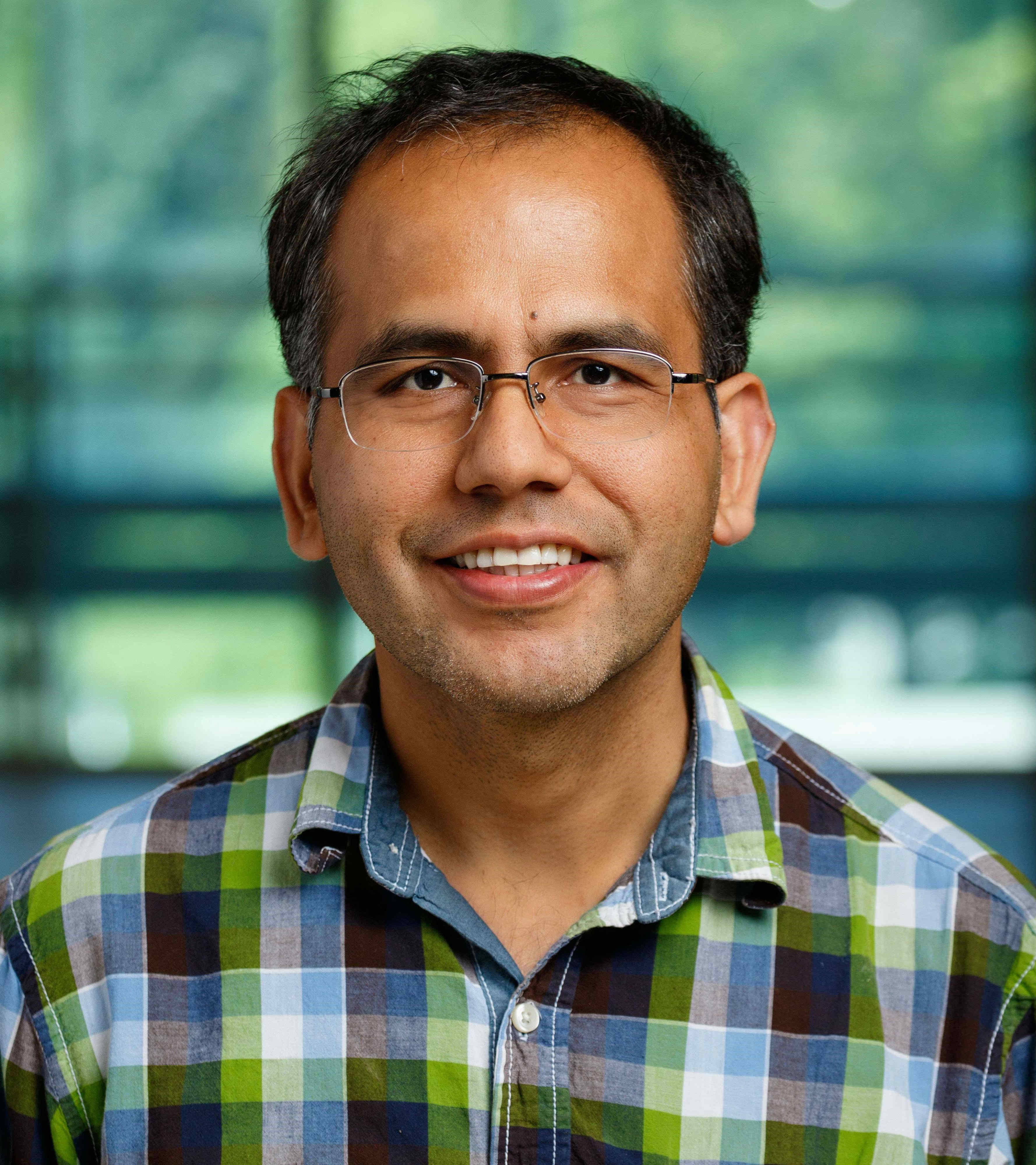
Dr Laxman Mainali, a Nepali biophysicist and researcher in the United States, has been awarded a grant of USD 1.75 million for a study regarding alpha-Crystallin protein’s role in cataract (moti bindu) formation.
National Institutes of Health (NIH), a renowned US government agency tasked with biomedical and public health research, has provided Dr Mainali with the amount for microscopic study of the role of alpha-Crystallin protein present in the lens of the eye in cataract formation.
alpha-Crystallin is a key protein in the human eye lens to maintain its clarity and proper refractive index, which is crucial for focusing light onto the retina.
Various other studies indicate that as people age, the layer of alpha-Crystallin proteins in the lens membrane increases. Additionally, cholesterol levels in the lens also change with age.
Dr Mainali’s study highlights the role of alpha-Crystallin proteins (αAc, αBc, and αABc) in cataract formation. When these proteins begin to bind abnormally to the lens membrane, it can cause cataract, clouding the lens.
The study suggests that maintaining higher cholesterol levels in the lens membrane could prevent protein binding that leads to cataracts. It also hints that developing treatments to boost cholesterol levels in the lens might help prevent or slow down cataract development.
He has been given the grant to test this hypothesis in a state-of-the-art laboratory, NIH mentioned. The study will also help to understand how cataracts develop at birth as well as at young and old age.
The grant spans over five years and is a continuation to an earlier grant worth USD 1.5 million he received in 2019 to commence research on the subject matter.
He claimed that his previous research laid the bases for eye treatment without requiring surgery, and added that the current research would make it a reality.
Moreover, he is currently working as an Assistant Professor of Physics at Boise State University in the US state of Idaho.
He was born and brought up in Kakarbhitta of present-day Mechinagar Municipality in Jhapa district of Koshi Province.
Read More Stories

NEPSE rises 28 points as trading activity improves
The stock market rebounded on Friday, with the NEPSE index gaining 27.94 points,...

Government estimates NRs 723 billion needed to rebuild flood-damaged areas
The government has estimated that NRs 723.31 billion will be required to rebuild...

Market falls by double digit for second session as turnover declines
The stock market extended its decline for a second consecutive session on Thursday,...